Used for centuries, birthing chairs are low in height, and provide back support by facilitating sitting in the squatting position.
This model helps you to move your pelvis freely so that you can maneuver yourself into a more comfortable position easily.
Scientifically, squatting is the best position for easy and safe delivery.
While a conventional labor table requires you to apply extra force, the birthing chair helps to use the force of gravity and helps control labor pains.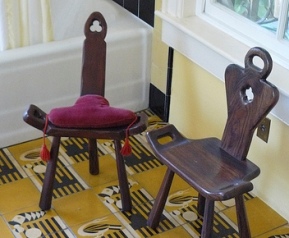
Birthing chairs today are much more sophisticated than in the past and many can be turned into delivery tables to give you a stronger sense of empowerment, while others are equipped with straps to help you maneuver you into the correct position for delivery.
Some are three-legged birthing stools with an elevated slanting back and circular seat with a big hole in the middle. The lower part of the chair can be removed or folded, and enables you to sit, recline or lie down. Mirrors, lights, or basins can also be added to balance the chair.
Pros and cons of birthing chair:
While squatting aids gravity to speed up an easy delivery process, the main drawback of a birthing chair is the possibility of excessive tearing of the perineum. This happens when the baby’s head puts too much pressure on the pelvis. This makes post-partum recovery an extended healing period.