
-End of the Second Trimester
As you near the end of the second trimester of pregnancy i.e. when you are 26 weeks pregnant, your belly size will increase and you will feel a little more discomfort during this week and those to come.
As your belly size increases in pregnancy week by week, your baby’s movements will increase too. There are just a few weeks left for the big moment of his or her arrival.
Lamaze classes
Most mothers are already aware of the main principles of Lamaze and if you have not joined a prenatal course so far, this is something you should do in pregnancy week 26.
If you feel the need to inquire other women about their pregnancy experience, this is something natural; so make the most of the experience of joining the online community of mothers-to-be.
26th week of pregnancy symptoms and physical changes that occur in your body
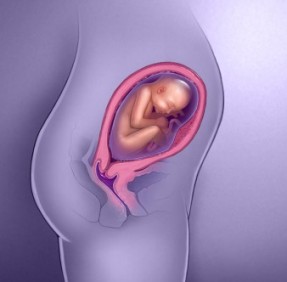 Congratulations! You’ve covered two-thirds of your pregnancy and entered into the week 26 of pregnancy
Constipation
Throughout pregnancy, you will produce higher levels of progesterone, which relaxes the muscle tissue throughout your body along with the G.I. tract (gastrointestinal tract).
These increased hormone levels slow down the digestion process considerably. Don’t get over-concerned though; there are various natural remedies to help you reduce constipation.
Consume a diet rich in fiber and increase your intake of fruits and vegetables, whole grains or oatmeal especially now at least, when you are 26 weeks pregnant.
Braxton Hicks contractions
By this week, the uterus will be about 2½ inches above the belly button. It is very common for you to experience a sudden tightening and relaxing of the uterus.
Don’t panic, this is completely normal and is known as Braxton Hicks contractions. Usually these contractions are painless and occur at irregular intervals. They are the body’s way of preparing for the upcoming event and aid in toning the uterus for the difficult job of labor
Pregnancy workouts are still a good idea
Remember also that being physically active is very important when you are in week 26 pregnancy. Set aside some time for walking or swimming. Increasing general activity levels often improves the bowel movement without requiring a suppository.
What should you expect?
The back pains tend to increase during this week and this is because your hormones soften your ligaments preparing you for birth.
Most women also experience jittery and restless legs during the second half of pregnancy. This is a very common state known as restless leg syndrome. In order to overcome this condition, cut down caffeine from your diet, slowly stretch your calf muscles, and undergo deep muscle massages.
As your size increases after the 26th week of pregnancy, you will experience various discomforts such as pressure in the pelvis, back pain, headaches and leg cramps more frequently. During this period, high blood pressure is also a common condition; so you need to take extra care in overcoming these conditions.
From this week onwards, you need to consume 300 extra calories daily for proper development of your baby.
Care you need to take when you are in week 26 pregnancy
Your doctor will most likely perform a blood test to identify if you suffer from anemia. Since you are bigger every day, you should be very careful with your feet, avoid staying in the sun or in the cold and monitor your vaginal secretion.
Avoid fatty foods for they will increase the stomach discomfort. Make sure you do not put pressure on your spine and you maintain a correct posture.
Make a delivery plan
You can start making a delivery plan. Think about who you want to be in the delivery room, whether or not you would like your delivery to be recorded by a camera, what you would like you partner to do during the delivery, etc.
Changes that occur in the fetus when you are 26 weeks pregnant
- By this week, your 26 week fetus is about the size of 14 inches from head to toe and weighs 1 pound 12 ounces to 2 pounds 3 ounces.
- Your baby will be very active between 24-28 weeks.
- The brain wave activities will develop to help in sight and hearing.
- The part of the cortex responsible for personality and attention becomes more alert starting with this week.
- By this week, your little one’s eyelids are separated and the baby will have his/her first moments of sight. The retina begins to form. Optic nerves start to work.
- Your baby will respond to touch.
- The baby’s fingerprints are formed.
- Your baby will be able to move its head back and forward.
- Your baby’s head hair will start to grow and you can even distinguish its color in 26 weeks pregnant ultrasound.
- The baby responds to a light oriented towards the mother’s tummy.
- When you are in 26 week pregnancy, air sacs will be developed in your baby’s lungs. Your baby will start to secrete more and more surfactant, the substance that keeps lung tissues from sticking to itself. This substance allows the lungs to expand normally during breathing.
- The baby’s skin will turn opaque from transparent and will start to develop the color it will have at birth.
- Your baby will respond well to loud, startling sounds.
- Your baby continues to collect fat beneath its loose skin.
Major body parts such as brain tissues and organs start to develop very rapidly. Brain activity levels continue to increase and they function at accelerated levels for the first 7-8 years of childhood.
Safety tips for 26 weeks pregnancy
When you are 26 weeks pregnant, it is a bit late to go on vacation before the arrival of your baby. Air travel is also not recommended after the 7th month, as there is a chance you may go into labor. So, before planning air travel, consult your practitioner.
However, if you must travel during the third trimester of your pregnancy, you will need to take some precautionary measures:
- Consume small and frequent meals that have less fat content. Motion sickness is the most common problem during pregnancy.
- Before boarding, it is better to go to the bathroom.
- Fasten your seat belt below the belly.
- Drink more and more fluids because air travel causes dehydration, which again causes contractions.
Get more information on what to expect when you are 27 weeks pregnant.


My weight is 90kgs even i cont walk for a minuet.how can i over come this?