
Anencephaly is a severe congenital birth defect in which the fetus will have no brain.
This condition occurs in approximately 1 in 1,000 pregnancies. This is a neural tube defect.
The expected life for a baby with anencephaly after birth is just few hours or few days.
Babies with this condition lack part or the entire cerebrum from the brain.
There is no bony covering over the back of the head and also there are missing bones around the front and sides of the head.
In 25% of cases, babies with anencephaly live to the end of pregnancy, but they can die at the time of delivery. This condition can be detected by a specialist with the help of high resolution ultrasound scan as early as 10th week of pregnancy.
During the 16th week of pregnancy, the AFP (alfa feto protein) levels are measured along with a maternal serum testing. If the test results in high levels of AFP, then there is a greater chance for your child to suffer from neural tube defects.
The main cause behind anencephaly:
During your pregnancy, the brain and spine begin as a flat plate of cells, which rolls into the tube, called as neural tube. If entire or a single part of neural tube not succeeds to close, then it leads to an open neural tube defect (ONTD). This small opening remains exposed or enclosed with a bone or skin.
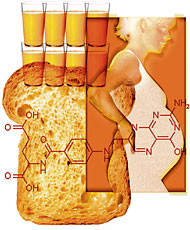
Anencephaly and spina bifida are the most popular open neural tube defects and comes rarely. Anencephaly is the condition where neural tube fails to close at the base of the skull, whereas spina bifida happens when the neural tube fails to close anywhere along the spine.
Once a baby is born with open neural tube defect in a family, then the chances for ONTD in the family again increases to 4-10%.
The main causes behind anencephaly include: deficiency of folic acid, undiagnosed diabetes, harmful chemical exposure, genetic causes, hypervitaminosis A, use of anticonvulsant medications and higher temperatures of 102 degrees or higher for more than 5 hours.
The most common symptoms of anencephaly include:
- Lack of bones covering at the back of baby’s neck
- Bones missing at the front and sides of the neck
- Formation of ears with folds
- Congenital heart disease
- Cleft palate, a condition in which the top of the baby’s mouth does not close completely. This leaves an opening, which again extends into baby’s nasal cavity.
- Lack of cerebrum, which finally lead to unconsciousness and there is no chance for your baby to survive.
- Babies with anencephaly can neither see nor hear and they can not feel any pain.
Generally there is no cure for anencephaly. But, you can prevent it by taking 4-5 grams of folic acid everyday in pregnancy and continue it until the third month of pregnancy.






I leave these comments with great pain and sorrow that today we had an ultrasound of our unborn baby (boy) and the ultrasound revealed the unforgettable images and sad news of our unborn 4and a half month old fetus to be having Anencephaly. This is most shocking revelation for us and the doctor has suggested immediate abortion. We live in Hong Kong and are having a daughter before this pregnancy. I appeal to all the people to pray for us to God that we can survive this shock of our life and May God bless us with another angel son again who could lead a healthy life. We are feeling the pain of our life and are suffering from this traumatic experience and me and my wife are devastated. I hope and pray for all expectant mother to have healthy babies and God bless everyone.