Archive for the 'TESTS AND PROCEDURES' Category


Carrier Screen Test For Cystic Fibrosis

Monday 5 January 2009

This test is available to all pregnant women and also to their partners.

CF carrier screen test is performed to determine whether a person carries the abnormal genetic patterns that cause cystic fibrosis or not.

Cystic fibrosis is an inherited condition. This disease mainly affects digestion and breathing. Mainly this disease is the result of an abnormal gene that makes your body to produce thick mucus in the lungs.

This mucus causes an infection that can be a life threatening condition. The maximum life expectancy for a person with cystic fibrosis is 30 years.

Use of CF carrier screen:

  • This prenatal test determines carriers of cystic fibrosis.
  • Determines your risk of carrying a child with CF
  • Diagnoses cystic fibrosis both prenatal and postnatal
  • This test identifies familial transformation in affected individuals.

You need to undergo this test before or in early pregnancy. In order to conduct the test, a blood or saliva sample is taken.

Possibility of getting cystic fibrosis to your child:

The only way to get cystic fibrosis is to have two genes that cause CF. One comes from mother and the other comes from father, which means that both the parents have CF carriers.


Chorionic Villus Sampling May Increase Risk Of Hemangiomas

Saturday 27 December 2008

Performing chorionic villus sampling (CVS) for prenatal diagnosis may lead to an increased rate of blood vessel malformations called hemangiomas in infants, according to a review in the November Journal of Craniofacial Surgery.

Dr. Lewis B. Holmes of Massachusetts General Hospital for Children, Boston, reviews past research on the possible link between CVS and the development of hemangiomas, limb defects, and certain other malformations.

According to Dr. Holmes, the findings suggest but do not prove some possible ways in which CVS might lead to “vascular disruption defects or hemangiomas.”

Chorionic villus sampling is a frequently performed prenatal test in which a small sample of the placenta is obtained early during pregnancy to look for evidence of genetic diseases. The procedure is generally considered safe.

However, in the past decade, several published reports have suggested “occasional fetal effects” in infants undergoing CVS, including an increased rate of hemangiomas.

Hemangiomas are common blood vessel malformations, caused by abnormal growth of the cells lining the blood vessels (endothelial cells). They range from small birthmarks to large malformations causing serious deformity.

Read more at Medical News Today


Cordocentesis - A Diagnostic Test for Fetal Abnormalities

Monday 20 October 2008

Also known as fetal blood sampling or Percutaneous Umbilical Cord Blood Sampling (PUBS), cordocentesis is a diagnostic test mainly used to examine the blood of the fetus for detecting fetal abnormalities.

This prenatal testing is used to diagnose in utero complications along with Down syndrome and heart defects.

How is the test performed?

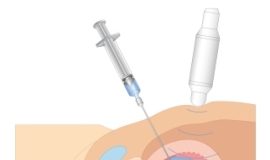
Advanced imaging ultrasound is used to find the area where the baby’s umbilical cord joins the placenta.

During the procedure, a thin needle is passed through the abdomen and uterine walls to the umbilical cord to get a blood sample. The only difference between this test procedure and amniocentesis is that blood is retrieved from the fetus.

When is the test performed?

Usually, the test is done when the required information is inconclusive or cannot be obtained from amniocentesis, ultrasound or CVs. Usually, the right time to undergo this test is after the gestational period of 17 weeks, i.e. after the complete development of the umbilical cord.

How is cordocentesis useful?

The test is used to detect chromosomal abnormalities such as Down syndrome and other blood disorders like fetal hemolytic disease. It also helps diagnose the following abnormalities:

  • Fetal anemia;


New Prenatal Test For Down Syndrome Less Risky Than Amniocentesis

Tuesday 7 October 2008

Pregnant women worried about their babies’ genetic health face a tough decision: get prenatal gene testing and risk miscarriage, or skip the tests and miss the chance to learn of genetic defects before birth.

But a new prenatal test could make this dilemma obsolete. The new method, developed by scientists at Stanford University, the Howard Hughes Medical Institute and Lucile Packard Children’s Hospital, requires only a maternal blood sample to spot chromosomal disorders such as Down syndrome.

“Right now, people are risking their pregnancies to get this information,” said Yair Blumenfeld, MD, a postdoctoral medical fellow in obstetrics and gynecology and co-author of a paper describing the technique.

Current prenatal gene tests, such as amniocentesis and chorionic villus sampling, require inserting a needle in the uterus and carry a miscarriage risk of around half a percent.

“Non-invasive testing will be much safer than current approaches,” said Stephen Quake, PhD, professor of bioengineering and the study’s senior author.

The new technique takes advantage of fragments of fetal DNA in the woman’s blood. Safety may not be the only gain. Quake hopes the test will spot genetic problems much earlier in gestation than the other methods.


Chorionic Villus Sampling Seen Safe

Saturday 4 October 2008

Testing for genetic defects early in pregnancy through chorionic villus sampling, or CVS, does not appear to raise the risk of fetal loss.

CVS involves using a needle to collect samples of the embryonic structure that goes on the form the placenta.

The process can be performed as early as 10 weeks into pregnancy, and provides cells of fetal origin that can be examined for chromosomal abnormalities.

There has been concern that the procedure might cause miscarriage, but in the current study the fetal loss rate following chorionic villus sampling was no different than the rate among pregnant women who did not undergo an invasive procedure.

“With the recent recommendations for screening for chromosomal abnormalities…demand for prenatal diagnosis are expected to increase,” the researchers write in the medical journal Obstetrics & Gynecology.

“Providing reliable information on the fetal loss rate and potential risk factors for fetal loss is important during counseling before undergoing an invasive procedure.”

Read more at Reuters


Multiple Marker Screening To Track Baby’s Abnormalities!

Thursday 2 October 2008

Usually done within the second trimester of pregnancy i.e. between 15-18 weeks of pregnancy, multiple marker screening is a non-invasive blood test which can detect whether your baby is at an increased risk of certain problems.

Ideally, this test is done in conjunction with first-trimester screening tests. This combination is known as integrated or sequential screening.

Similar to other screening tests, multiple marker test will give you an estimation of your baby’s complications, but not a diagnosis.

The test also helps you to decide whether you need an invasive diagnostic test such as amniocentesis.

The markers measured by this test include: alpha-fetoprotein (AFP), a protein produced by the baby’s liver, and also two hormones generated by the placenta called as human chronic gonadotropin (hCG) and unconjugated estriol (uE3).

There are other multiple marker tests:  quad screen, which measures the above three substances and a fourth marker called inhibin A.

Who needs to undergo this test?

Multiple marker screening is advised for all pregnant women, whether or not they have low or high risk complications associated with pregnancy. These are the high risk factors:


Non-Stress Test To Evaluate Fetal Condition After 28 Weeks 

Monday 29 September 2008

The fetal non-stress test is a very simple and non-invasive procedure performed after 28 weeks of gestation.

So named because it ensures no stress is placed on your fetus during the test, and it also helps to evaluate your baby’s condition.

The procedure involves monitoring of your baby’s heartbeat in order to ensure that s/he is getting sufficient oxygen levels through the placenta.

The heartbeat is recorded both when the baby is resting and also when s/he is moving. Usually, the baby’s heartbeat is recorded as high when s/he is moving or kicking.

Typically, the test is performed if you are in post-date pregnancy or if you have a high-risk pregnancy, in the month before the due date.

Reasons against non-stress test:

  • If you are suffering from diabetes and being treated with regular insulin, high blood pressure or any other medical issues that keep your pregnancy at high risk.
  • If you suffer from gestational hypertension;
  • If your baby is under-sized and not growing enough;
  • If the baby is inactive than normal;
  • If the level of amniotic fluid is high or even too low;


Rh Blood Factor In Pregnancy

Thursday 25 September 2008

Largely determined by the type on antigens in blood cells,  our blood type is categorized into one of four groups: A, B, AB, or O.

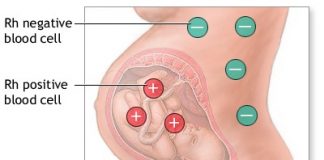
Antigens (or the Rh factor) are the proteins that exist on the surface of the blood cells, and which cause a reaction from the immune system.

If antigens are present, your Rh factor will be positive, like 85% of the world; if they are not, your Rh factor will be negative.

Do you have Rh positive or Rh negative?

Have a blood test taken during your prenatal visit to determine your blood type.

If you have Rh negative and your partner has Rh positive blood, your fetus can get the Rh factor from your partner to enable it to have Rh positive. However, it can be problematic if the fetus’s blood has an Rh factor which your blood doesn’t.

Pregnancy in Rh negative mothers

Rh negative in a mother leads to the development of antibodies in the Rh positive baby. Even a small amount of your baby’s blood mixed with your blood can cause an allergic reaction in your baby.


EPT Pregnancy Test -The Safe And Easy Way To Confirm Your Pregnancy

Thursday 10 July 2008

ept testEPT pregnancy test is the early home pregnancy test kit and is designed to make it easy for you to find out if you are pregnant in the privacy of your own home.

This test kit is 99% accurate for detecting your pregnancy hormones. But, some pregnant women do not have noticeable amounts of pregnancy hormone in their urine on the first day of the missed period or they may have miscalculated the first day of their periods.

EPT pregnancy test kit is very easy to use, read and also accurate. You can use this kit the day you miss your period. This kit can measure up to 40 mIU of hCG.

There are two types of home pregnancy tests that are commonly marked as Error Proof Tests. One is EPT certainly digital home pregnancy test and the other is EPT +/- home pregnancy test.

EPT certainly digital home pregnancy test kit offers unmistakable results with a digital readout. It is very easy to use and you can use it during any time of the day. This test kit is 99% accurate from the day you miss your periods. If you do not have detectable amounts of hCG in your urine, then the test can show false results. During these times, wait for some more days and take the test again.


Benefits And Risks Associated With Dilation And Curettage!

Monday 7 July 2008

dilation and curettageDilation and curettage is the procedure, also called as D&C. D means dilation, which is enlarging and C means curettage, which means scrapping.

Mainly, this procedure consists of enlarging or expanding the entrance of the uterus to insert the sharp instrument in order to take out the tissue samples.

This is a regularly used procedure and is considered as safe. This is a therapeutic gynecological procedure and also a rarely used procedure in first trimester abortion. This is an adjunct procedure to hysteroscopy and polypectomy.

Dilation and curettage procedure:

The first and the main step in dilation and curettage procedure is to dilate the cervix. Usually, this is performed a few hours before the surgery. Before the procedure, you are administered with general anesthesia.

After this, a metal rod with one handle on one end and with a sharp loop on the other end is inserted into your uterus through the dilated cervix. Generally, the curette is used to smoothly scrape the lining of the uterus and remove the tissues from uterus. This tissue is examined for completeness in the case of miscarriage or abortion treatment or for detecting any other abnormalities.


«« Previous Posts