Archive for the 'Pregnancy Exercise' Category
Regularly practicing exercise during pregnancy is the best way to build your bones, muscles, and to boost your energy levels to keep yourself healthy.
If your pregnancy is a low risk pregnancy and your doctor suggests you to continue exercising, you can get various benefits even from mild to moderate fitness routines.
Helpful guidelines for exercising during pregnancy:
Staying consistent:
Regular exercising is the best way, but not occasionally. It is better to exercise three days a week. Maintain your fitness routine in the mild-moderate range.
Choose easy steps to practice:
Don’t do the activities that need jumping motions or sudden changes in the direction as they can strain your joints and injure you.
Observe your back carefully:
Avoid exercising on your back after the first trimester of your pregnancy. Avoid motionless standing for longer periods. Both these activities can diminish the amount of blood flow to the uterus.
Don’t do too much:
You must be aware that you have very less oxygen available for exercising. Stop doing the exercises if you become fatigued and don’t attempt to exercise to that extent of exhaustion.
Maintain your balance:
Kegel exercises can also be called as pelvic floor exercises.
These exercises help in strengthening the muscles that support your uterus, rectum, bowels, bladder and also help in strengthening your vaginal muscles.
Kegel exercises during pregnancy help in developing the ability to relax and control the muscles while preparing for labor and delivery.
Also, these exercises are recommended during the postpartum period in order to promote the healing of perennial tissues and control increased urination.
Benefits of kegel exercises:
- Mostly pregnant women are encouraged to do kegel exercises as they make pelvic floor muscles stronger and help during childbirth, especially pushing makes easier.
- Kegel exercises lesses your chance of tears happening during labor.
- During the postpartum period, kegel exercises can help in perennial healing of episiotomy wounds and also in preventing postpartum incontinence and toning your stretched vaginal muscles so that it makes sex better.
- Kegel exercises prevent incontinence from occurring in the later life.
- They create your orgasm healthier.
- They decrease the chance of hemorrhoids.
- They improve the vaginal sensation.
- Help in regaining bladder control and decrease your urinary problems.
Maintaining the routine exercise program becomes difficult when you are pregnant.
So, you can make use of pilates pregnancy to stay active and healthy.
Pilates pregnancy is the best exercise for women. It is a form of exercise method designed to use during pregnancy and also after delivery to attain the shape of your body back.
Pilates pregnancy helps to maintain strength and flexibility of the important muscles that carry the baby, making pregnancy much easier. It also provides body-awareness, breathing and relaxation.
However, before following the Pilates pregnancy exercises, it is very essential for you to understand the principles of the Pilates method.
The principles that you need to remember while practicing Pilates include:
Centering is the most essential principle of Pilates pregnancy. Vigorously, Pilates exercises are basis from center. Centering provides this by bringing the focus physically to the center of the body (the central core muscles), the area between the lower ribs and pubic bone.
The way you breathe during Pilates pregnancy is very important. In Pilates exercise, the principle of breathing is completely based on enforced exhalation and full inhalation because coordinating the exhalation and inhalation of breathing ensures that oxygen is carried in and the waste gases are passed out at the right time for maximum benefit.
It is true that you may not practice your normal exercise routine when you become pregnant.
However, with few alterations to the existing exercise routine, you can greatly benefit from pregnancy exercise throughout your pregnancy.
Practicing pregnancy exercise regularly can make your body strong and healthy. It also helps prepare your body for labor and delivery.
By practicing pregnancy exercise regularly all through your pregnancy can boost your energy levels, relieve your backaches and improve your self-image.
It also helps you sleep better and lessen the pain associated with pregnancy. You can also have faster recovery after labor.
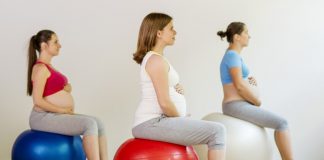
Walking is the best pregnancy exercise throughout your pregnancy. However, try to practice aerobic, strength, and flexibility exercises.
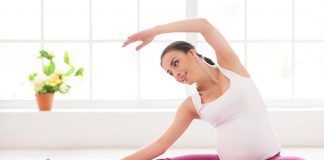
Dancing, pilates, swimming, water aerobics, yoga, stretching, biking are also good pregnancy exercises. Whatever the exercise may be, always listen to your body signs.
Always avoid sit-ups, weight lifting, jarring, bouncing, leaping, and exercises with backward bending.
Before starting an exercise program, consult your doctor and confirm that practicing pregnancy exercise is right for your health condition and will not harm you or your unborn baby.
Recent Posts
- Pregnancy Week 20 - Successfully Accomplished Half The Journey
- Tips To Prevent Constipation During Pregnancy!
- Infections May Cause Many Premature Births
- Chiropractic Care During Pregnancy To Get Your Spine Properly Aligned!
- Acute Maternal Stress During Pregnancy Linked To Development Of Schizophrenia
- Pregnancy Week 19 - The Baby Becomes More Taller
- Birth Control Patch To Prevent Your Pregnancy!
- Alcohol Dependence Among Women Linked To Delayed Childbearing
- How Safe Is It To Have VBAC?
- Pregnancy Week 18 - Increased Belly, Increased Appetite And Complex Balancing Act